Sourced from The Australia Institute, 11 November 2010
'Time, as they say, is money. In fact, one of the most important aspects of our lives - what we do for a living - involves exchanging our time, in the form of labour, for money.
Yet, millions of Australians 'donate' unpaid overtime to their employers on a regular basis.
Like money, time is vital to personal wellbeing. We need enough time to keep healthy, exercise, relax, sleep, develop and maintain relationships - in other words, to live a balanced life.
But there are a range of demands on people's time that can stop us from getting enough time to do these other things. If these demands are excessive, we can say that someone is suffering from time poverty.'
11 November 2010


'Planet Won't Be Destroyed Because God Promised Noah' - Politican Bidding to Chair US Energy Committee
For those of you of faith, of any kind, this is not an attack on faith - in fact, there are very many faith and religious groups who are working towards sustainable futures and acknowledging the need for humanity to act as stewards of the Earth, for other species, future generations etc.
But I think it is fair to say - we need a bit more than this at this stage of the game.
It would be very funny, worthy of Monty Python, if it were not so damn frightening.
Excerpt from the Daily Mail, 10 November 2010
'A Republican congressman hoping to chair the powerful House Energy Committee refers to the Bible and God on the issue of global warming.
Representative John Shimkus insists we shouldn't concerned about the planet being destroyed because God promised Noah it wouldn't happen again after the great flood.
Speaking before a House Energy Subcommittee on Energy and Environment hearing in March, 2009, Shimkus quoted Chapter 8, Verse 22 of the Book of Genesis.
He said: 'As long as the earth endures, seed time and harvest, cold and heat, summer and winter, day and night, will never cease.'
The Illinois Republican continued: 'I believe that is the infallible word of God, and that's the way it is going to be for his creation.
'The earth will end only when God declares its time to be over. Man will not destroy this earth. This earth will not be destroyed by a flood.'...
The Committee on Energy and Commerce, to give it its full title, is one of the oldest standing committees of the United States House of Representatives having been established in 1795.
It takes a central role in formulating U.S. policy on climate change and global warming....'
10 November 2010
Why Self-Interest Can Save the Climate Debate (And Waiting for Consensus Might Waste Your Future)
Great words from Global Footprint Network Founder & Ecological Footprint co-creator Mathis Wackernagel
Reposted in full from Footprint Network News, 10 November 2010
'As world leaders prepare for the next round of climate talks in Cancun, it is time to put to right a misperception that for too long has shackled our approach to this vital issue. The error is simply this: Taking action is a burden some nations will need to shoulder for the good of the world – rather than the single best action each nation can take to further its own long-term interests.
The question by governments of “What’s in it for me?” has up to now been a major stumbling block to international agreement. But if leaders and their administrations truly understood the underlying resource dynamics, they would have the exact opposite approach. They would see it is in their self-interest to act quickly and aggressively, whatever the actions taken by their global neighbors. In fact, each country’s own actions will become more urgent and valuable the less others do.
Why would it be in any individual country’s interest to address a problem whose costs are ultimately born by all of humanity? Consider the nature of the carbon problem.
Climate change, first and foremost, is a consequence of high fossil fuel dependence. Even though climate change is a global problem, the fossil fuel dependence that contributes to it carries growing economic risks for the emitting country. Working our way out of this addiction takes time, and the longer we wait to radically rethink and retool our societies, the less chance we will have to alter course.
But there is another important piece of the picture beyond fossil fuel. Climate change is not an issue in isolation, but rather, a symptom of a broader challenge: humanity’s systematic overuse of the planet’s finite resources.
Our natural systems can only generate a finite amount of raw materials (fish, trees, crops, etc.) and absorb a finite amount of waste (such as carbon dioxide emissions). Global Footprint Network quantifies this rate of output through a measure called biocapacity. Biocapacity is as measurable as GDP – and, ultimately, at least as significant, as access to basic living resources underlies every economic activity a society can undertake.
Up to now, we have treated biocapacity as an essentially limitless flow, to the point that our demand for nature’s services now outstrips biocapacity by 50 percent, according to Global Footprint Network’s latest research . This approach has been an integral part of the climate crisis, as with every hectare of forest we clear for raw materials, built-up land or other land-uses (such as grazing or cropland), we reduce the Earth’s ability to absorb CO2 and regulate climate.
Ecological trends suggest, however that we will soon be facing another crunch: biocapacity.
Consider this: No matter which way the future goes, whether we avoid climate disaster or we continue with business as usual, increasing consumption, population and CO2 emission, the pressure on biocapacity will escalate— and having access to biocapacity will earn ever higher premiums.
The Climate Accord vs. the Runaway Scenario
The US President, European heads of state and other G-20 leaders have affirmed the need to stay within a 2º Celsius climate alteration (at a minimum) to avoid widespread calamity. Some climate models point to a 350 ppm limit for CO2 in the atmosphere in order to achieve this – less than the carbon concentration we have today. Yet even if we aim for the more conservative target of 450 ppm, this would call for shifting out of fossil fuel, and a wholesale restructuring of the way we produce and use energy. But hardly anybody admits this mathematical truth.
Even with significant development of wind and solar power technologies, if we want to have the amount and ease of choice around energy availability we have enjoyed up to now, we will need to rely to some extent on fuels from biological sources. Add to that the resources needed to provide for a growing population, a swelling middle class, and the two billion alive today who lack enough to meet basic needs. It is clear, even with a strong climate accord, biocapacity will be under pressure as never before.
And what if we don’t succeed in heading off climate change? Biocapacity will become even more vulnerable and, in all likelihood, subject to staggering declines. With crops failing and drought widespread, the failure of international cooperation to have met the climate challenge will set a poor stage for negotiating the distribution of dwindling resources. Those countries whose economies depend most on access to massive amounts of resources – especially resources from abroad – will find themselves particularly vulnerable.
Winning – or Losing – the Earth Race
In a world facing a biocapacity crunch, the winning economic strategies will be preserving biocapacity on the one hand, and reducing demand for it on the other. And here’s a bit of good news: those also happen to be leading strategies for minimizing climate change.
Many believe the race to develop green technology – what columnist Thomas Friedman has dubbed the “Earth Race”— will bring the spoils of the future to the early movers and adopters, and secure innovative nations and enterprises with positions of advantage on the global stage. This is the carrot pushing green innovation. But there is an even more powerful stick. Those countries and cities trapped in energy- and resource-intensive infrastructure will not be able to adapt in time to meet the emerging resource constraints.
In the face of a failure to reach agreement at Cancun, individual countries will have to do more to curb their resource demand in order to assure their long-term stability and security. The lack of agreement won’t give us a break from taking action—on the contrary, it will force us to work significantly harder.
If our leaders understood this, the discussion at global climate talks would take an entirely new direction. We are not asking leaders to go to Cancun simply ready to do what’s needed for other nations. Rather, we are asking them to come to the table mindful of what they must do to responsibly serve their own.'
Reposted in full from Footprint Network News, 10 November 2010
'As world leaders prepare for the next round of climate talks in Cancun, it is time to put to right a misperception that for too long has shackled our approach to this vital issue. The error is simply this: Taking action is a burden some nations will need to shoulder for the good of the world – rather than the single best action each nation can take to further its own long-term interests.
The question by governments of “What’s in it for me?” has up to now been a major stumbling block to international agreement. But if leaders and their administrations truly understood the underlying resource dynamics, they would have the exact opposite approach. They would see it is in their self-interest to act quickly and aggressively, whatever the actions taken by their global neighbors. In fact, each country’s own actions will become more urgent and valuable the less others do.
Why would it be in any individual country’s interest to address a problem whose costs are ultimately born by all of humanity? Consider the nature of the carbon problem.
Climate change, first and foremost, is a consequence of high fossil fuel dependence. Even though climate change is a global problem, the fossil fuel dependence that contributes to it carries growing economic risks for the emitting country. Working our way out of this addiction takes time, and the longer we wait to radically rethink and retool our societies, the less chance we will have to alter course.
But there is another important piece of the picture beyond fossil fuel. Climate change is not an issue in isolation, but rather, a symptom of a broader challenge: humanity’s systematic overuse of the planet’s finite resources.
Our natural systems can only generate a finite amount of raw materials (fish, trees, crops, etc.) and absorb a finite amount of waste (such as carbon dioxide emissions). Global Footprint Network quantifies this rate of output through a measure called biocapacity. Biocapacity is as measurable as GDP – and, ultimately, at least as significant, as access to basic living resources underlies every economic activity a society can undertake.
Up to now, we have treated biocapacity as an essentially limitless flow, to the point that our demand for nature’s services now outstrips biocapacity by 50 percent, according to Global Footprint Network’s latest research . This approach has been an integral part of the climate crisis, as with every hectare of forest we clear for raw materials, built-up land or other land-uses (such as grazing or cropland), we reduce the Earth’s ability to absorb CO2 and regulate climate.
Ecological trends suggest, however that we will soon be facing another crunch: biocapacity.
Consider this: No matter which way the future goes, whether we avoid climate disaster or we continue with business as usual, increasing consumption, population and CO2 emission, the pressure on biocapacity will escalate— and having access to biocapacity will earn ever higher premiums.
The Climate Accord vs. the Runaway Scenario
The US President, European heads of state and other G-20 leaders have affirmed the need to stay within a 2º Celsius climate alteration (at a minimum) to avoid widespread calamity. Some climate models point to a 350 ppm limit for CO2 in the atmosphere in order to achieve this – less than the carbon concentration we have today. Yet even if we aim for the more conservative target of 450 ppm, this would call for shifting out of fossil fuel, and a wholesale restructuring of the way we produce and use energy. But hardly anybody admits this mathematical truth.
Even with significant development of wind and solar power technologies, if we want to have the amount and ease of choice around energy availability we have enjoyed up to now, we will need to rely to some extent on fuels from biological sources. Add to that the resources needed to provide for a growing population, a swelling middle class, and the two billion alive today who lack enough to meet basic needs. It is clear, even with a strong climate accord, biocapacity will be under pressure as never before.
And what if we don’t succeed in heading off climate change? Biocapacity will become even more vulnerable and, in all likelihood, subject to staggering declines. With crops failing and drought widespread, the failure of international cooperation to have met the climate challenge will set a poor stage for negotiating the distribution of dwindling resources. Those countries whose economies depend most on access to massive amounts of resources – especially resources from abroad – will find themselves particularly vulnerable.
Winning – or Losing – the Earth Race
In a world facing a biocapacity crunch, the winning economic strategies will be preserving biocapacity on the one hand, and reducing demand for it on the other. And here’s a bit of good news: those also happen to be leading strategies for minimizing climate change.
Many believe the race to develop green technology – what columnist Thomas Friedman has dubbed the “Earth Race”— will bring the spoils of the future to the early movers and adopters, and secure innovative nations and enterprises with positions of advantage on the global stage. This is the carrot pushing green innovation. But there is an even more powerful stick. Those countries and cities trapped in energy- and resource-intensive infrastructure will not be able to adapt in time to meet the emerging resource constraints.
In the face of a failure to reach agreement at Cancun, individual countries will have to do more to curb their resource demand in order to assure their long-term stability and security. The lack of agreement won’t give us a break from taking action—on the contrary, it will force us to work significantly harder.
If our leaders understood this, the discussion at global climate talks would take an entirely new direction. We are not asking leaders to go to Cancun simply ready to do what’s needed for other nations. Rather, we are asking them to come to the table mindful of what they must do to responsibly serve their own.'
The Story of Electronics
Brilliant, brilliant communications tactic - label people as if they were meeting higher expectations, as if that is what they already are:
'...we need to give these designers a challenge they can rise to, and do what they do best - innovate. Already, some of them are realising they are too smart to be dump designers...'
Sourced from The Story of Stuff, 9 November 2010
'...this November, Americans are expected to spend over $8.5 billion on consumer electronics, motivated by enticements to buy gizmos we don't really need or to replace gadgets that are still working with slightly newer versions.
The thing is, making all these devices takes an enormous environmental and public health toll: mining the metals trashes communities from Congo to Indonesia; assembling them uses huge amounts of water and energy and exposes workers to a host of toxic chemicals; and getting rid of them when we're on to the next, newer, better model creates mountains of e-waste.
The good news is that while the production, consumption and disposal of short-lived, toxics laden electronics are a really big problem, the solution is pretty simple: Make 'em Safe, Make 'em Last, and Take 'em Back.'
'...we need to give these designers a challenge they can rise to, and do what they do best - innovate. Already, some of them are realising they are too smart to be dump designers...'
Sourced from The Story of Stuff, 9 November 2010
'...this November, Americans are expected to spend over $8.5 billion on consumer electronics, motivated by enticements to buy gizmos we don't really need or to replace gadgets that are still working with slightly newer versions.
The thing is, making all these devices takes an enormous environmental and public health toll: mining the metals trashes communities from Congo to Indonesia; assembling them uses huge amounts of water and energy and exposes workers to a host of toxic chemicals; and getting rid of them when we're on to the next, newer, better model creates mountains of e-waste.
The good news is that while the production, consumption and disposal of short-lived, toxics laden electronics are a really big problem, the solution is pretty simple: Make 'em Safe, Make 'em Last, and Take 'em Back.'
09 November 2010
Pre Post Mortem
Excerpt from James Howard Kunstler's (author of 'The Long Emergency')'s blog, 8 November 2010.
Check out a comment he received from someone on this post:
"My boy gave me a copy of your book, The Long Emergency. I won't look at it because I don't believe in conspiricies. If this peak oil nonsense was true, don't you think the Bush/Cheney people would of told us? Not that I'm a big fan of them, but, wake up!! - they were IN the oil business. You think they would of known."
'...The unvarnished truth of our predicament is that all pathways now lead to the same destination: a falling US standard of living as measured conventionally. What's unknown is how swift and severe this decline might be, exactly what all its implications are for the social order and geopolitics, and whether it might present itself in a form that could be called collapse. For the moment, one question is: do we go broke the standard way by having less money, or the trick way by destroying the value of our money so that folks (as President Obama might say) have lots of it, only it isn't worth anything. There is even at this late date much debate between the inflationistas and the deflationistas - that is, those who think the economy ends in a bang or a whimper.
I am stumped out loud, frankly, though an exogenous ill wind has me leaning just a bit in the "de" direction. The untold tonnage of bad financial paper out there, rotting away like so much herring stuffed in the bilges of a cosmic Flying Dutchman, would tend toward an outcome of wealth vanishing from our system - and money, which represents wealth, with it. Yet, there's no denying that the prices of everyday things such as food, gasoline, cotton, and steel are shooting up just now. Surely some of this is due to the sheer operations of finance, in which herds of believers in this-or-that stampede one way or another, in this case from bonds to commodities. But herds might get spooked by something (anything!) and suddenly reverse direction, seeking safety in cash and its equivalents. Really anything might happen in the stock markets, too, at this point, they are so detached from their former reality as a price discovery mechanism.
I like the formulation of John Michael Greer that we're about to see something called hyperstagflation, which would amount to sharply rising prices in an economy going nowhere fast. But if it's based on anything like the stagflation of the 1970s, that journey also ends in an inflationary fiasco, and logically some hyper version of it, which would kill the US government as we know it. Much as I loiter in the precincts of thought experiment, I don't really relish that outcome. But, sadly, we seem to be in one of those times when events outrun personalities and their meager abilities to react.
It's been my contention for weeks now that criminal mischief on the mortgage scene - all those lost, doctored, forged, robo-signed documents - will slow foreclosures (and even plain vanilla transactions) to the extent that the real estate market will choke on un-sellable property, leading to suffocation of the big banks and ultimately generalized thrombosis of the system. Hence: Dr. Bernanke appears on the scene with the defibrillation paddles of quantitative easing, hoping to goose the circulation of money through the quivering bodies of BAC, Citi, and their croaking cohorts. They may stagger back into their beds in the intensive care unit, but their fate has only been postponed.
Back in the real world, outside the hospital for ailing banks, it's harder and harder to get paid by anybody for anything, so the circulation of money slows in the everyday economy. Accounts receivable go unreceived. Payrolls can't be met. Pink slips are issued. Mortgages won't get paid. Credit card bills lie unopened on the kitchen table while the late fees, penalties, and other cockamamie charges rack up, and one day some suspicious looking fat men in mullet hair-doos and wife-beater shirts, with flames tattooed on their necks, show up with a tow truck and start hitching your car to it and you wonder for a moment how you managed to park illegally in your own driveway - wait a minute...!
Don't worry folks, that sound of heavy breathing you hear is the exhalations of the big banks reviving on their IV drip lines of financial liquidity. Pretty soon, the nurses will bring them Kansas City strip steak dinners, with truffled mashed potatoes, asparagus flown in from Chile, and even a nice year-2000 Clos Du Val reserve cabernet. You - you can go down to the food pantry and get yourself some government cheese. Melt it over some ranch-style Doritos and hunker down with Fox News where a dry drunk will explain to you the morbid workings of the Trilateral Commission and how the Rockefellers are scheming to take over the National Football League for the greater glory of Karl Marx while selling your daughter to Albanian white slavers. You'll think you understand the world. You'll feel fulfilled and easy in your mind.'
History of Fossil Fuels in Five Minutes
Sourced from the Post Carbon Institute on YouTube
'Fossil fuels have powered human growth and ingenuity for centuries. Now that we're reaching the end of cheap and abundant oil and coal supplies, we're in for an exciting ride. While there's a real risk that we'll fall off a cliff, there's still time to control our transition to a post-carbon future.
A deeper analysis of the crises we face, and possible solutions we can work on right now can be found in the Post Carbon Reader.'
'Fossil fuels have powered human growth and ingenuity for centuries. Now that we're reaching the end of cheap and abundant oil and coal supplies, we're in for an exciting ride. While there's a real risk that we'll fall off a cliff, there's still time to control our transition to a post-carbon future.
A deeper analysis of the crises we face, and possible solutions we can work on right now can be found in the Post Carbon Reader.'
The Bomb is Still Ticking

...we have a great new logo thanks to Mouse Designs, my sister's logo and graphic design company!
Check out my latest original at Post Growth, 8 November 2010
'It is difficult to determine whether the authors of the article ‘Population bomb still a fizzer 40 years on’ (The Australian, 8 November) are mischievous attention-seekers or ill-informed myopics....
Contrary to the authors’ claims, the vast majority of people who identify as environmentalists are not misanthropists – they are absolutely concerned with humanity.
Maintaining our natural capital, our natural asset base, is a non-negotiable prerequisite for securing human survival and wellbeing.
Whether or not anyone ‘worships nature as a goddess’ is irrelevant – what we should be interested in is physics and biology 101, which is that ecosystems and biodiversity are (aside from their own intrinsic worth) the life support systems of humanity....'
08 November 2010
The Secret Powers of Time
This is not only a great example of an innovative communication approach, but an important message for anyone concerned with our relationship to time:
Sourced from YouTube
Sourced from YouTube
The Green Police - Audi 2010 Green Car Super Bowl Commercial
Alright - this does the wrong thing according to just about everything I have learned about communication for environment/sustainability [don't use guilt in relation to green issues]...and I still have concerns about so-called "green" cars...but here I am posting it and circulating it...because it's funny!!
Sourced from YouTube
Sourced from YouTube
07 November 2010
Dangerous Memes
The spread of ideas can be a double edged sword...
Sourced from TED, February 2002
Excerpt from transcript
'...people are interestingly resistant to the idea of applying evolutionary thinking to thinking - to our thinking...it's ideas...that hijack our brains. Now, am I saying that a sizable minority of the world's population has had their brain hijacked by parasitic ideas? No. It's worse than that. Most people have. There are a lot of ideas to die for. Freedom...Justice. Truth. Communism. Many people have laid down their lives for communism, and many have laid down their lives for capitalism. And many for Catholicism. And many for Islam. These are just a few of the ideas that are to die for. They're infectious.
Yesterday, Amory Lovins spoke about "infectious repititis." It was a term of abuse, in effect. This is unthinking engineering. Well, most of the cultural spread that goes on is not brilliant, new, out-of-the-box thinking. It's infectious repetitis. And we might as well try to have a theory of what's going on when that happens, so that we can understand the conditions of infection. Hosts work hard to spread these ideas to others. I myself am a philosopher, and one of our occupational hazards is that people ask us what the meaning of life is. And you have to have a bumper sticker, you know, you have to have a statement. So, this is mine.
The secret of happiness is: Find something more important than you are and dedicate your life to it. Most of us - now that the "Me Decade" is well in the past - now we actually do this. One set of ideas or another have simply replaced our biological imperatives in our own lives...It's not maximizing the number of grandchildren we have. Now, this is a profound biological effect. It's the subordination of genetic interest to other interests. And no other species does anything at all like it.
Well, how are we going to think about this? It is, on the one hand, a biological effect, and a very large one. Unmistakable. Now, what theories do we want to use to look at this? Well, many theories. But how could something tie them together? The idea of replicating ideas; ideas that replicate by passing from brain to brain. Richard Dawkins, whom you'll be hearing later in the day, invented the term "memes," and put forward the first really clear and vivid version of this idea in his book "The Selfish Gene." Now here am I talking about his idea. Well, you see, now, it's not his. Yes - he started it. But it's everybody's idea now. And he's not responsible for what I say about memes. I'm responsible for what I say about memes.
Actually, I think we're all responsible for not just the intended effects of our ideas, but for their likely misuses. So it is important, I think, to Richard, and to me, that these ideas not be abused and misused. They're very easy to misuse. That's why they're dangerous. And it's just about a full-time job trying to prevent people who are scared of these ideas from caricaturing them and then running off to one dire purpose or another. So we have to keep plugging away, trying to correct the misapprehensions so that only the benign and useful variants of our ideas continue to spread...
Memes are like viruses. That's what Richard said, back in '93. And you might think, "Well, how can that be? I mean, a virus is - you know, it's stuff! What's a meme made of?"...A virus is a string of nucleic acid with attitude. That is, there is something about it that tends to make it replicate better than the competition does. And that's what a meme is; an information packet with attitude. What's a meme made of?...They're made of information, and can be carried in any physical medium. What's a word made of? Sometimes when people say, "Do memes exist?" I say, "Well, do words exist? Are they in your ontology?" If they are, words are memes that can be pronounced.
Then there's all the other memes that can't be pronounced. There are different species of memes. Remember the Shakers? ...they're basically extinct now. And one of the reasons is that among the creed of Shaker-dom is that one should be celibate. Not just the priests. Everybody. Well, it's not so surprising that they've gone extinct. But in fact that's not why they went extinct. They survived as long as they did at a time when the social safety nets weren't there. And there were lots of widows and orphans, people like that, who needed a foster home. And so they had a ready supply of converts. And they could keep it going. And, in principle, it could've gone on forever. With perfect celibacy on the part of the hosts. The idea being passed on through proselytizing, instead of through the gene line.
So the ideas can live on in spite of the fact that they're not being passed on genetically. A meme can flourish in spite of having a negative impact on genetic fitness. After all, the meme for Shakerdom was essentially a sterilizing parasite. There are other parasites which do this - which render the host sterile. It's part of their plan. They don't have to have minds to have a plan.
I'm just going to draw your attention to just one of the many implications of the memetic perspective, which I recommend. I've not time to go into more of it. In Jared Diamond's wonderful book, "Guns, Germs and Steel," he talks about how it was germs, more than guns and steel, that conquered the new hemisphere - the Western hemisphere - that conquered the rest of the world. When European explorers and travelers spread out, they brought with them the germs that they had become essentially immune to, that they had learned how to tolerate over hundreds and hundreds of years, thousands of years, of living with domesticated animals who were the sources of those pathogens. And they just wiped out - these pathogens just wiped out the native people, who had no immunity to them at all.
And we're doing it again. We're doing it this time with toxic ideas. Yesterday, a number of people - Nicholas Negroponte and others - spoke about all the wonderful things that are happening when our ideas get spread out, thanks to all the new technology all over the world. And I agree. It is largely wonderful. Largely wonderful. But among all those ideas that inevitably flow out into the whole world thanks to our technology, are a lot of toxic ideas. Now, this has been realized for some time. Sayyid Qutb is one of the founding fathers of fanatical Islam, one of the ideologues that inspired Osama bin Laden. "One has only to glance at its press films, fashion shows, beauty contests, ballrooms, wine bars and broadcasting stations." Memes.
These memes are spreading around the world and they are wiping out whole cultures. They are wiping out languages. They are wiping out traditions and practices. And it's not our fault, anymore than it's our fault when our germs lay waste to people that haven't developed the immunity. We have an immunity to all of the junk that lies around the edges of our culture. We're a free society, so we let pornography and all these things - we shrug them off. They're like a mild cold. They're not a big deal for us. But we should recognize that for many people in the world, they are a big deal. And we should be very alert to this, as we spread our education and our technology, one of the things that we are doing is we're the vectors of memes that are correctly viewed by the hosts of many other memes as a dire threat to their favorite memes - the memes that they are prepared to die for.
Well now, how are we going to tell the good memes from the bad memes? That is not the job of the science of memetics. Memetics is morally neutral. And so it should be. This is not the place for hate and anger. If you've had a friend who's died of AIDS, then you hate HIV. But the way to deal with that is to do science, and understand how it spreads and why in a morally neutral perspective.
Get the facts. Work out the implications. There's plenty of room for moral passion once we've got the facts and can figure out the best thing to do. And, as with germs, the trick is not to try to annihilate them. You will never annihilate the germs. What you can do, however, is foster public health measures and the like that will encourage the evolution of avirulence. That will encourage the spread of relatively benign mutations of the most toxic varieties.'
Sourced from TED, February 2002
Excerpt from transcript
'...people are interestingly resistant to the idea of applying evolutionary thinking to thinking - to our thinking...it's ideas...that hijack our brains. Now, am I saying that a sizable minority of the world's population has had their brain hijacked by parasitic ideas? No. It's worse than that. Most people have. There are a lot of ideas to die for. Freedom...Justice. Truth. Communism. Many people have laid down their lives for communism, and many have laid down their lives for capitalism. And many for Catholicism. And many for Islam. These are just a few of the ideas that are to die for. They're infectious.
Yesterday, Amory Lovins spoke about "infectious repititis." It was a term of abuse, in effect. This is unthinking engineering. Well, most of the cultural spread that goes on is not brilliant, new, out-of-the-box thinking. It's infectious repetitis. And we might as well try to have a theory of what's going on when that happens, so that we can understand the conditions of infection. Hosts work hard to spread these ideas to others. I myself am a philosopher, and one of our occupational hazards is that people ask us what the meaning of life is. And you have to have a bumper sticker, you know, you have to have a statement. So, this is mine.
The secret of happiness is: Find something more important than you are and dedicate your life to it. Most of us - now that the "Me Decade" is well in the past - now we actually do this. One set of ideas or another have simply replaced our biological imperatives in our own lives...It's not maximizing the number of grandchildren we have. Now, this is a profound biological effect. It's the subordination of genetic interest to other interests. And no other species does anything at all like it.
Well, how are we going to think about this? It is, on the one hand, a biological effect, and a very large one. Unmistakable. Now, what theories do we want to use to look at this? Well, many theories. But how could something tie them together? The idea of replicating ideas; ideas that replicate by passing from brain to brain. Richard Dawkins, whom you'll be hearing later in the day, invented the term "memes," and put forward the first really clear and vivid version of this idea in his book "The Selfish Gene." Now here am I talking about his idea. Well, you see, now, it's not his. Yes - he started it. But it's everybody's idea now. And he's not responsible for what I say about memes. I'm responsible for what I say about memes.
Actually, I think we're all responsible for not just the intended effects of our ideas, but for their likely misuses. So it is important, I think, to Richard, and to me, that these ideas not be abused and misused. They're very easy to misuse. That's why they're dangerous. And it's just about a full-time job trying to prevent people who are scared of these ideas from caricaturing them and then running off to one dire purpose or another. So we have to keep plugging away, trying to correct the misapprehensions so that only the benign and useful variants of our ideas continue to spread...
Memes are like viruses. That's what Richard said, back in '93. And you might think, "Well, how can that be? I mean, a virus is - you know, it's stuff! What's a meme made of?"...A virus is a string of nucleic acid with attitude. That is, there is something about it that tends to make it replicate better than the competition does. And that's what a meme is; an information packet with attitude. What's a meme made of?...They're made of information, and can be carried in any physical medium. What's a word made of? Sometimes when people say, "Do memes exist?" I say, "Well, do words exist? Are they in your ontology?" If they are, words are memes that can be pronounced.
Then there's all the other memes that can't be pronounced. There are different species of memes. Remember the Shakers? ...they're basically extinct now. And one of the reasons is that among the creed of Shaker-dom is that one should be celibate. Not just the priests. Everybody. Well, it's not so surprising that they've gone extinct. But in fact that's not why they went extinct. They survived as long as they did at a time when the social safety nets weren't there. And there were lots of widows and orphans, people like that, who needed a foster home. And so they had a ready supply of converts. And they could keep it going. And, in principle, it could've gone on forever. With perfect celibacy on the part of the hosts. The idea being passed on through proselytizing, instead of through the gene line.
So the ideas can live on in spite of the fact that they're not being passed on genetically. A meme can flourish in spite of having a negative impact on genetic fitness. After all, the meme for Shakerdom was essentially a sterilizing parasite. There are other parasites which do this - which render the host sterile. It's part of their plan. They don't have to have minds to have a plan.
I'm just going to draw your attention to just one of the many implications of the memetic perspective, which I recommend. I've not time to go into more of it. In Jared Diamond's wonderful book, "Guns, Germs and Steel," he talks about how it was germs, more than guns and steel, that conquered the new hemisphere - the Western hemisphere - that conquered the rest of the world. When European explorers and travelers spread out, they brought with them the germs that they had become essentially immune to, that they had learned how to tolerate over hundreds and hundreds of years, thousands of years, of living with domesticated animals who were the sources of those pathogens. And they just wiped out - these pathogens just wiped out the native people, who had no immunity to them at all.
And we're doing it again. We're doing it this time with toxic ideas. Yesterday, a number of people - Nicholas Negroponte and others - spoke about all the wonderful things that are happening when our ideas get spread out, thanks to all the new technology all over the world. And I agree. It is largely wonderful. Largely wonderful. But among all those ideas that inevitably flow out into the whole world thanks to our technology, are a lot of toxic ideas. Now, this has been realized for some time. Sayyid Qutb is one of the founding fathers of fanatical Islam, one of the ideologues that inspired Osama bin Laden. "One has only to glance at its press films, fashion shows, beauty contests, ballrooms, wine bars and broadcasting stations." Memes.
These memes are spreading around the world and they are wiping out whole cultures. They are wiping out languages. They are wiping out traditions and practices. And it's not our fault, anymore than it's our fault when our germs lay waste to people that haven't developed the immunity. We have an immunity to all of the junk that lies around the edges of our culture. We're a free society, so we let pornography and all these things - we shrug them off. They're like a mild cold. They're not a big deal for us. But we should recognize that for many people in the world, they are a big deal. And we should be very alert to this, as we spread our education and our technology, one of the things that we are doing is we're the vectors of memes that are correctly viewed by the hosts of many other memes as a dire threat to their favorite memes - the memes that they are prepared to die for.
Well now, how are we going to tell the good memes from the bad memes? That is not the job of the science of memetics. Memetics is morally neutral. And so it should be. This is not the place for hate and anger. If you've had a friend who's died of AIDS, then you hate HIV. But the way to deal with that is to do science, and understand how it spreads and why in a morally neutral perspective.
Get the facts. Work out the implications. There's plenty of room for moral passion once we've got the facts and can figure out the best thing to do. And, as with germs, the trick is not to try to annihilate them. You will never annihilate the germs. What you can do, however, is foster public health measures and the like that will encourage the evolution of avirulence. That will encourage the spread of relatively benign mutations of the most toxic varieties.'
The Steady State Economy Conference: Working Towards An Alternative to Economic Growth
An overview of this event held in Leeds, UK, June 2010
Sourced from the Center for the Advancement of the Steady State Economy
Click on the links below to navigate to the individual workshop pages and learn more about the speaker(s), chair, and rapporteur for each workshop, and also read the policy proposals:
Sourced from the Center for the Advancement of the Steady State Economy
Click on the links below to navigate to the individual workshop pages and learn more about the speaker(s), chair, and rapporteur for each workshop, and also read the policy proposals:
The Ecology of Growth
Reposted in full from the new economics foundation, 15 October 2010
'One of the few good things about the current financial crisis is the extent of serious soul-searching about the right way to deliver economic success. Britain has been among the worst-affected countries, losing perhaps five years of economic growth following the pricking of the credit bubble – predicted with precision by Ann Pettifor in her 2006 classic, The Coming First World Debt Crisis. Unemployment has soared, public-sector deficits have ballooned and a new age of austerity beckons. Business, politicians and the media are all calling for a rapid return to growth to create jobs, repair public finances and pay for a creaking welfare state.
'One of the few good things about the current financial crisis is the extent of serious soul-searching about the right way to deliver economic success. Britain has been among the worst-affected countries, losing perhaps five years of economic growth following the pricking of the credit bubble – predicted with precision by Ann Pettifor in her 2006 classic, The Coming First World Debt Crisis. Unemployment has soared, public-sector deficits have ballooned and a new age of austerity beckons. Business, politicians and the media are all calling for a rapid return to growth to create jobs, repair public finances and pay for a creaking welfare state.
Yet this regrowth option lacks conviction. It’s not just that finance – the vanguard sector of the last wave of growth – is still structurally challenged, or that debt-burdened consumers look unlikely to act as economic shock-troops once again. More profoundly, there is a dawning recognition that the growth model adopted by the industrialised countries over the past half-century no longer works. Our model of growth has simply become uneconomic, with more stuff not only failing to bring additional wellbeing in the so-called rich world, but also storing up impending environmental shocks, most notably peak oil and runaway climate change.
In his latest book, A Blueprint for a Safer Planet, Nick Stern calmly sets out the reasons why “high-carbon growth will eventually destroy itself”, as fossil fuel prices rise and the physical impacts of climate change start to bite. In spite of Copenhagen, a new economic race is under way: to deliver low-carbon growth. According to Climate Solutions 2 (a pioneering report on low-carbon industrialisation), some 20 clean energy, energy efficiency, low-carbon agriculture and sustainable forestry sectors will need to grow by 20–24% every year for the next four decades if greenhouse-gas concentrations are to be stabilised. Only three of these sectors are currently on track.
Yet one paradoxical outcome of the current economic crisis is the degree to which key governments have recognised low-carbon growth as one of the key routes out of recession. South Korea, for example, is investing 2% of its gross domestic product (GDP) over the next five years in its ‘green growth’ plan, with a clear intention to gain the economic and employment benefits of these emerging sectors.
Simply painting growth green doesn’t do the trick, however. We know that growth in GDP is a lousy measure of performance. It fails to distinguish between income and capital, thereby enabling both the liquidation of natural resources and the build-up of unsustainable levels of credit to be treated as growth. It fails to capture the social dimensions of economic activity, thereby enabling vast gulfs in inequality to be masked by per capita statistics. And it takes market valuation of prices as its touchstone, something that the credit crunch has taught us to be deeply wary of.
Tim Jackson’s Prosperity without Growth is perhaps the most elegant exposition of a route out of this maze. The spectre of growth has haunted environmentalism since the publication of The Limits to Growth in 1972, with sustainable development emerging in the 1980s as an uneasy way of reconciling economic expansion, social justice and environmental resilience. Jackson helps break through some of the entrenched positions that have encumbered this debate, by placing his attention squarely on the ends of economic activity: expanding our capabilities for flourishing as human beings. Growth in incomes and consumption still remains an important component of such prosperity for most of the world’s peoples. But Jackson questions whether growth is still “a legitimate goal for rich countries”, for reasons of human happiness as much as ecological necessity.
Jackson challenges the belief of technological optimists that strong policies can effectively decouple growth from environmental impacts. Taking climate change as a case in point, he demonstrates that average global carbon intensity would need to be 130 times lower by mid-century to meet climate goals in an equitable world of steady population and economic growth – falling from around 770 grams of CO2 per dollar of output today to just 6 grams by 2050. The apparent absurdity of this scenario should not cloud our minds to the theoretical possibility of this ‘super green growth’ scenario. As Paul Ekins has argued, “the sacrifice of the environment to economic growth is not ineluctable”.
Jackson’s focus on an extended notion of prosperity means that he is at least as interested in the weakening connection between rising incomes and wellbeing as he is in environmental limits. A range of international surveys show that beyond an annual income level of US$15,000 per head, life satisfaction barely changes between countries with quite different levels of GDP. There appears to be a clear point beyond which extra income does not deliver extra wellbeing.
In their inspirational book The Spirit Level, Richard Wilkinson and Kate Pickett argue that “we have got close to the end of what economic growth can do for us” in terms of quality of life. Within the industrialised world, it is income inequality rather than absolute levels of GDP that explains differences in a range of health and social outcomes (such as trust, the status of women, mental health, drug use, educational attainment, murder rates, life expectancy and obesity). And inequality even constrains the time we have to ourselves: “People in more unequal societies do the equivalent of two to three months’ extra work a year. A loss of the equivalent of an extra eight or twelve weeks’ holiday is a high price to pay for inequality.”
If growth is to be dethroned as the primary goal of policy in the rich world, what should take its place? Jackson’s book is a brave attempt to develop a new ecological macro-economics, setting out a framework for scaling up investments in resource efficiency, clean technologies and ecosystem enhancement. Just as the welfare state of the 20th century – with its investments in health and education – laid the foundations for today’s knowledge economy, then investing in the quality of our natural resource base will form the basis for the next wave of innovation, employment and, yes, growth.
Rich countries dedicate at least 15–20% of their GDP on investments in human capital through spending on health and education; absurdly, spending on the entire environmental foundation of our wellbeing is less than a tenth of this. The problem with current discussions of the green economy is not that the proposals are too expensive, but that they are not expensive enough as a share of economic output.
The task of confronting the human costs of growth has barely begun, however. For Wilkinson and Pickett, this means consciously focusing on reducing inequality as a way of improving wellbeing for everyone. For Jackson it also involves dismantling the culture of consumerism (for example, through controls on advertising). Perhaps the clearest strategy of all comes in the new economics foundation’s The Great Transition, ably supported by its subsequent reports Growth Isn’t Possible and 21 Hours, its call for a 21-hour working week.
One of the great failures of the past three decades has been how the enormous improvements in labour productivity generated from new technology have been reaped by a very small part of the population, increasing inequality and stress. Cutting the amount of working time is a way of sharing these benefits, breaking the cycle of work and spend, and liberating that most non-renewable of resources, time: for family, friends and sheer enjoyment.
What is refreshing about this crop of books is the shared confidence that an economics that puts growth in its place will be more prosperous, healthier and sustainable. Some of the specific recommendations may not be especially new, but taken as a whole, a clear strategy for social and environmental transformation is starting to emerge. As T.S. Eliot wrote in Little Gidding in the middle of the Second World War, “we shall not cease from exploration, and the end of all our exploring will be to arrive where we started and know the place for the first time”.'
Jamie Oliver, Food Revolutionary, On Change
Excerpt from The Guardian, 11 October 2010
'..."I hate making TV documentaries," he says with feeling. "Because it takes quite a lot of energy to know that you're going to get your arse kicked and people will hate you, or fight you, for large proportions of time. You know when I did School Dinners I got so much abuse for a year and a half, and the people who were getting in the way of some of the biggest progress...you know, once the show was broadcast, all of a sudden it was 'authentic'. But until then it was just lots of – well, people hate change. So I don't particularly enjoy doing the stuff I'm most proud of."
...You know that government advertising campaign, Change4Life, cost £20m on billboards? I could have built over 100 Ministries of Food in towns all over the country for that. The public doesn't need to know that we're in a f*cking state, that we need five a day. What it needs is skin on skin, it needs beacons locally where you can find out stuff for free, and have lessons. It's the only way forward, and it won't blossom through cuts."
'..."I hate making TV documentaries," he says with feeling. "Because it takes quite a lot of energy to know that you're going to get your arse kicked and people will hate you, or fight you, for large proportions of time. You know when I did School Dinners I got so much abuse for a year and a half, and the people who were getting in the way of some of the biggest progress...you know, once the show was broadcast, all of a sudden it was 'authentic'. But until then it was just lots of – well, people hate change. So I don't particularly enjoy doing the stuff I'm most proud of."
...You know that government advertising campaign, Change4Life, cost £20m on billboards? I could have built over 100 Ministries of Food in towns all over the country for that. The public doesn't need to know that we're in a f*cking state, that we need five a day. What it needs is skin on skin, it needs beacons locally where you can find out stuff for free, and have lessons. It's the only way forward, and it won't blossom through cuts."
Jamie's Ministries of Food have been established in four cities now, where the public are taught basic cooking skills in a bid to wean them off processed food and ready meals. But the future of the original Ministry in Rotherham is now in doubt, threatened by cuts, and Oliver is incredulous.
"The reason why I'm so passionate about the Ministry of Food is that we're fully booked, and if we had another staff member we could put another third on the numbers. We do about 8,000 people a year from one little cheap £130,000 setup grant from Rotherham council. We're fully booked, we're busy. It works. But they're all looking at me now for money, and the thing is I don't have it. I haven't got dough sitting in banks for me or for anything else."
Some readers may think come off it, you're really rich, I suggest. His wealth is routinely reported to be anywhere between £25m and £45m; could he not write a cheque for £130,000?
"I can't. I can't. I just can't, it's as simple as this. I've got my businesses that I look after, I don't have venture capitalists swoop in and pay for everything. Basically everything I've got funds my restaurants, the vulnerabilities are all mine. I've got 18 months of wages for my staff in the bank, but I'm not spending their money."
Oliver has recently extended his campaign to America, where he made a series called Jamie's American Food Revolution, set in the nation's most obese town. It won him an Emmy, and has been recommissioned, but far from celebrating, Oliver is still recovering. "The town didn't react very well to me being there, and there was one fellow on the radio who did a lot of shit-stirring that caused basically six weeks of aggro for me. No one really wanted to get involved or help, they thought we wanted to make them look stupid." With hindsight, I ask innocently, does he feel he made any tactical errors?
"No," he shoots back, "it was brilliant. You know, change is very hard – structures, organisations, businesses, people, anyone really. And if you're shining a light on one of the most unhealthy places in the world, it has to be a car crash, there's no pretty way. I knew what I was flying over there for, I knew it would be horrible, but I hadn't done horrible without my family. When you have shit days you need to be able to go and hug your kids, do you know what I mean? I didn't have that, and it was hard, really hard."
And yet, I say, it's these documentaries which make us love him. "But there's still lots of people who don't like me," he counters straight away. "You can tell that if you go on any blog. I annoy lots of people. You know people often don't like the good guys, and I try to be a good guy, I'm consistent. You know, I've been consistent in my direction, the beliefs that I have. And people hate that."...
"No one understands me. No one. My wife doesn't even understand me in terms of what I want to do. Everyone thinks everything's about money. You think I'm going to America to make money? That is probably the worst financial use of my time in the world, going to America next year, cos there's no money in TV, and they don't buy books. I don't want to break America, I don't want to move there, I'll be there for three months next year but I don't want to be making that show, I want Americans to be making that f*cking show. I'm not pleased I got the Emmy cos I got the Emmy; I'm pleased because it will get other people to make these shows, and get the public active, and get McDonald's to start doing some other shit instead of the shit they are doing."I have a fairly low regard for money to be honest, it doesn't really add that much to a lot of the things that give me pleasure in life. However, if you have an idea, and you've got it, you can do it. If you haven't got money and you've got a great idea, it's hard to get it done. So for me I want to get in a position where I can do stuff myself. I want to be able to go into Essex and say: 'I want all your schools.' I want to set up a company that would be not for profit; I want to set up a company that would be like the government used to be, where we train dinner ladies militantly, where we'd fit the kitchens out and deliver on budget. But it's not just Essex, you see, it's trying to create things that can be rolled out elsewhere. But it all comes down to money."
In the end, Oliver believes that change will only come through public pressure. "Although they don't know it, the public is still king. So what I try and do is shit-stir. In America, what hasn't happened yet is the public haven't really told business what they want. For instance, McDonald's America and McDonald's UK are totally different. You've got one public that's fairly well informed, which is here, so you know you've got organic milk, 100% free-range eggs; they do a huge amount of salads, they've done a huge amount of inward thinking in the last five years. So although they've been the enemy for many years, you've got to take your hat off and say well done, and carry on. America hasn't even done that, they've done nothing in comparison. The only difference is the public ask for more."
So if he had to choose only one element of his empire – the cookery shows, the restaurants, the books, Fifteen, or the campaigns – which one is closest to his heart?
"I'd love to be elitist, cos that's where my heart is – I'm a food geek. But it's f*ck-all use to anyone, absolutely no use to anyone, it doesn't change anything really. I really want to get school food sorted, and it ain't going to get sorted by the government. It needs investment, entrepreneurialism, expert management – and it's not going to happen, cos they'll never put their hands in their pockets or be there long enough to change anything."'
An Urban Orchard
Shot in and around Adelaide, South Australia
www.youtube.com/watch?v=P2oNXksw4Jk
The first South Australian homegrown and gleaned produce swap was held on Saturday 3 November 2008, at the Clarence Park Community Centre. The Urban Orchard is a homegrown fruit and vegetable exchange, enjoying a brisk trade and much discussion over the morning.
www.youtube.com/watch?v=P2oNXksw4Jk
The first South Australian homegrown and gleaned produce swap was held on Saturday 3 November 2008, at the Clarence Park Community Centre. The Urban Orchard is a homegrown fruit and vegetable exchange, enjoying a brisk trade and much discussion over the morning.
The Urban Orchard is based on the exchange of backyard fruit and vegetable surplus. Participation is open to everyone, and participants are invited to take produce when they can use it, and contribute when they can.
The Urban Orchard is an initiative of Friends of the Earth Adelaide and the Goodwood Goodfood Co-op.
When: 10.00am-12noon, first Saturday of the month.
Location: Clarence Park Community Centre, 72-74 East Avenue, Black Forest
Contact: Joel 0403 886 951, joel.catchlove [at] foe.org.au

There are also swap meets at Henley, Croydon and Gawler in South Australia: www.ceres.org.au/node/114
Social Procurement Guide
Reposted in full from Pro Bono News, 14 October 2010
'The Victorian Government has launched a guide to social procurement in Local Government - as part of a national project to develop social procurement procedures for organisations and individuals.
Social Procurement: A Guide for Victorian Local Government
'The Victorian Government has launched a guide to social procurement in Local Government - as part of a national project to develop social procurement procedures for organisations and individuals.
Social Procurement: A Guide for Victorian Local Government
The Centre for Social Impact (UNSW) together with Social Traders, Foresters Community Finance, the Victorian Government, Parramatta City Council and Brisbane City Council are all funding a national research project into social procurement which is due for release later this year.
Social procurement is the process of an organisation choosing to purchase a service which will also provide a social outcome.
The Victorian Government guide was launched by the Minister for Local Government, Richard Wynne and has been developed to support Victorian councils deliver stronger social outcomes through procurement. It is closely aligned with Social Procurement in Australia, an overarching national paper commissioned by the Centre for Social Impact.
The Guide says that each year Victorian councils spend around $3 billion procuring goods and services in a wide variety of expenditure areas. Social procurement recognises the collective buying power of Victoria’s 79 councils and encourages councils to consider what could be achieved if even a small percentage of council spending was focused on ‘value adding’, so that the purchase of goods and services also had positive social outcomes.
For example, it says waste management need not solely be centred around a contract to collect bins and manage waste. It could also simultaneously generate local employment, increase community recycling options, educate the community about waste minimisation, reduce landfill and contribute to building the local economy. The act of strategic procurement can lead to multiple positive social outcomes for the municipality.
Minister Wynne says social procurement is becoming increasingly popular as governments look at ways to meet social objectives as part of their triple-bottom line reporting.
He says the guide is complemented by the Expert Support Program, which will bring the guide to life by supporting the development of social procurement projects and initiatives by councils.
The Expert Support Program: Social Procurement in Practice encourages partnerships between councils and organisations that can deliver social impacts to the community and scope for local business to engage with their local council.
The guide highlights that incorporating social benefits into a council's procurement framework can involve requesting that suppliers deliver social impacts as part of a contract with scope for Not for Profits to actively participate in the tendering process.
While primarily written as a guide for Victorian councils, the guide also provides Not for Profits with insight into how councils are undertaking social procurement and how they might best position their company to engage with councils in this space.
The guide itself is an example of social procurement, having been designed by Blue SKYS Media, a social enterprise of St Kilda Youth Services which offers training and employment opportunities to disadvantaged youth.'
A Ghost Agreement
I love it when George Monbiot gets stuck in...
'It strikes me that governments are determined to protect not the marvels of our world, but the world-eating system to which they are being sacrificed; not life, but the ephemeral junk with which it is being replaced...if governments had met in Japan to try to save the banks, or the airline companies, or the plastic injection moulding industry, they would have sent more senior representatives, their task would have seemed more urgent, and every dot and comma of their agreement would have been checked by hungry journalists. When they meet to consider the gradual collapse of the natural world, they send their office cleaners and defer the hard choices for another ten years, while the media doesn’t even notice that they have failed to produce a written agreement. So, much as I’m revolted by the way in which nature is being squeezed into a column of figures in an accountant’s ledger, I am forced to agree that it may be necessary. What else will induce the blinkered, frightened people who hold power today to take the issue seriously?'
Reposted in full from The Guardian, 2 November 2010
'“Countries join forces to save life on Earth”, the front page of the Independent told us.
“Historic”, “a landmark”, a “much-needed morale booster”, the other papers chorused(1,2,3).
The declaration agreed at the summit in Japan last week to protect the world’s wild species and wild places was proclaimed by almost everyone a great success. There’s only one problem: none of the journalists who made these claims has seen it.
'It strikes me that governments are determined to protect not the marvels of our world, but the world-eating system to which they are being sacrificed; not life, but the ephemeral junk with which it is being replaced...if governments had met in Japan to try to save the banks, or the airline companies, or the plastic injection moulding industry, they would have sent more senior representatives, their task would have seemed more urgent, and every dot and comma of their agreement would have been checked by hungry journalists. When they meet to consider the gradual collapse of the natural world, they send their office cleaners and defer the hard choices for another ten years, while the media doesn’t even notice that they have failed to produce a written agreement. So, much as I’m revolted by the way in which nature is being squeezed into a column of figures in an accountant’s ledger, I am forced to agree that it may be necessary. What else will induce the blinkered, frightened people who hold power today to take the issue seriously?'
Reposted in full from The Guardian, 2 November 2010
'“Countries join forces to save life on Earth”, the front page of the Independent told us.
“Historic”, “a landmark”, a “much-needed morale booster”, the other papers chorused(1,2,3).
The declaration agreed at the summit in Japan last week to protect the world’s wild species and wild places was proclaimed by almost everyone a great success. There’s only one problem: none of the journalists who made these claims has seen it.
I checked with as many of them as I could reach by phone: all they had read was a press release, which, though three pages long, is almost content-free(4). The reporters can’t be blamed for this: though it was approved on Friday, the declaration has still not been published. I’ve now pursued people on three continents to try to obtain it, without success. Having secured the headlines it wanted, the entire senior staff of the Convention on Biological Diversity has gone to ground: my calls and emails remain unanswered(5). The British government, which lavishly praised the declaration, tells me it has no written copies(6). I’ve never seen this situation before: every other international agreement I’ve followed was published as soon as it was approved.
The evidence suggests that we’ve been conned. The draft agreement, published a month ago, contained no binding obligations(7). Nothing I’ve heard from Japan suggests that this has changed. The draft saw the targets for 2020 that governments were asked to adopt as nothing more than “aspirations for achievement at the global level” and a “flexible framework”, within which countries can do as they wish. No government, if the draft has been approved, is obliged to change its policies.
In 2002, the signatories to the convention agreed something similar: a splendid-sounding declaration which imposed no legal commitments. They announced that they would “achieve by 2010 a significant reduction of the current rate of biodiversity loss”. Mission accomplished, the press proclaimed, and everyone went home to congratulate themselves. Earlier this year, the UN admitted that the 2002 agreement was fruitless: “the pressures on biodiversity remain constant or increase in intensity”(8).
Even the desperately cheery press release suggests that all was not well. The meeting in Japan was supposed to be a summit; bringing together heads of government or heads of state. It mustered five of them: the release boasts of coralling the President of Gabon, the President of Guinea-Bissau, the Prime Minister of Yemen and Prince Albert of Monaco. (It fails to identify the fifth country: Lichtenstein? Pimlico?) One third of the countries represented there couldn’t even be bothered to send a minister. This is how much they value the world’s living systems.
It strikes me that governments are determined to protect not the marvels of our world, but the world-eating system to which they are being sacrificed; not life, but the ephemeral junk with which it is being replaced. They fight viciously and at the highest level for the right to turn rainforests into pulp, or marine ecosystems into fishmeal. Then they send a middle-ranking civil servant to approve a meaningless (and so far unwritten) promise to protect the natural world.
Japan was praised for its slick management of the meeting, but still insists on completing its mission to turn the last bluefin tuna into fancy fast food. Russia signed a new agreement in September to protect its tigers (the world’s largest remaining population)(9), but an unrepealed law effectively renders poachers immune from prosecution, even when caught with a gun and a dead tiger(10). The US, despite proclaiming a new commitment to multilateralism, refuses to ratify the Convention on Biological Diversity.
It suits governments to let us trash the planet. It’s not just that big business gains more than it loses from converting natural wealth into money. A continued expansion into the biosphere permits states to avoid addressing issues of distribution and social justice: the promise of perpetual growth dulls our anger about widening inequality. By trampling over nature we avoid treading on the toes of the powerful.
A massive accounting exercise, whose results were presented at the meeting in Japan, has sought to change this calculation. The Economics of Ecosystems and Biodiversity (TEEB) attempts to price the ecosystems we are destroying(11). It shows that the economic benefit of protecting habitats and species often greatly outweighs the money to be made by trashing them. A study in Thailand, for example, suggests that turning a hectare of mangrove forest into shrimp farms makes $1,220 per year, but inflicts $12,400 of damage every year on local livelihoods, fisheries and coastal protection. The catchment protected by one nature reserve in New Zealand saves local people NZ$136m a year in water bills. Three-quarters of the US haddock catch now comes from within 5km of a marine reserve off the New England coast: by protecting the ecosystem, the reserve has boosted the value of the fishery(12).
I understand why this approach is felt to be necessary. I understand that if something can’t be measured, governments and businesses don’t value it. I accept TEEB’s reasoning that the rural poor, many of whom survive exclusively on what the ecosystem has to offer, are treated harshly by an economic system which doesn’t recognise its value. Even so, this exercise disturbs me.
As soon as something is measurable it becomes negotiable. Subject the natural world to cost-benefit analysis and accountants and statisticians will decide which parts of it we can do without. All that now needs to be done to demonstrate that an ecosystem can be junked is to show that the money to be made from trashing it exceeds the money to be made from preserving it. That, in the weird world of environmental economics, isn’t hard: ask the right statistician and he’ll give you whichever number you want.
This approach reduces the biosphere to a subsidiary of the economy. In reality it’s the other way round: the economy, like all other human affairs, hangs from the world’s living systems. You can see this diminution in the language the TEEB reports use: they talk of “natural capital stock”, of “underperforming natural assets” and “ecosystem services”. Nature is turned into a business plan, and we are reduced to its customers. The market now owns the world.
But I also recognise this: that if governments had met in Japan to try to save the banks, or the airline companies, or the plastic injection moulding industry, they would have sent more senior representatives, their task would have seemed more urgent, and every dot and comma of their agreement would have been checked by hungry journalists. When they meet to consider the gradual collapse of the natural world, they send their office cleaners and defer the hard choices for another ten years, while the media doesn’t even notice that they have failed to produce a written agreement. So, much as I’m revolted by the way in which nature is being squeezed into a column of figures in an accountant’s ledger, I am forced to agree that it may be necessary. What else will induce the blinkered, frightened people who hold power today to take the issue seriously?'
Criminal Probe into E-Waste Exports
Reposted in full from The Environment Agency, 15 October 2010
'The Environment Agency has today charged nine people as part of the biggest investigation into illegal electrical waste exports from the UK to West Africa.
'The Environment Agency has today charged nine people as part of the biggest investigation into illegal electrical waste exports from the UK to West Africa.
All nine have been charged with offences under the Transfrontier Shipment of Waste Regulations 2007 and European Waste Shipment Regulations 2006 and bailed to attend Havering Magistrates Court on 11 November.
The law is clear that broken electricals, including everyday items such as mobiles, smart phones, laptops and TVs, cannot be sent overseas for disposal. As well as precious metals such as gold, copper and aluminium, electrical waste can contain hazardous substances including mercury and lead that are harmful to people and the environment.
There is good evidence that illegal exports of electrical waste from the UK is ending up on waste sites in Africa, causing harm to those who come into contact with it.
The Environment Agency’s National Environmental Crime Team Manager, Andy Higham, said:
“Over the past two years painstaking intelligence work by Environment Agency officers has uncovered a web of individuals and companies that appear to be making considerable sums of money by exporting electrical waste overseas.
“Exporters of broken electricals put at risk the lives of those who work on waste sites in developing countries. These are often children who are paid a pittance to dismantle products containing hazardous waste. Illegal exporters also avoid the costs of recycling in the UK and undermine law-abiding business.
“It is always a crime to export broken electricals and hazardous waste from the UK to developing countries to be dumped. The last thing we want is our waste causing harm to people or the environment overseas.”
Officers from the Environment Agency’s National Crime Team began their investigations in mid-2008. They soon uncovered a network of individuals, waste companies and export businesses allegedly involved in the export of electrical waste.
In some instances, it is alleged that considerable sums of money changed hands in deals to collect and recycle electrical waste while treatment costs were avoided.'
How Much Would You Pay for Planet Earth?
Excerpt from the New Scientist, 13 October 2010
'Putting a cash value on nature may give officials heading to a biodiversity summit the jolt they need
Invest in lush tropical forests, vibrant coral reefs and clear blue streams, and they will provide a healthy return. That's the message from a group of environmental economists who for the first time have estimated the cash value of ecosystems.
They say the figures show the case for conservation is overwhelming in pure economic terms. One case study found that protecting and replanting mangrove swamps in Vietnam cost $1.1 million - an investment which reduced spending on dyke maintenance by seven times as much each year.
Yet the scientists behind The Economics of Ecosystems and Biodiversity study (TEEB) admit frustration that most mainstream economists are blind to the value of biodiversity.
"Conservation has to be seen as an investment and not a cost," says Rudolf de Groot of Wageningen University in the Netherlands, one of the lead authors of the study.
TEEB was initiated at the 2007 G8 summit, in Germany. "It aims to do for biodiversity what the Stern report did for the economics of climate change," says de Groot. The group will launch the first part of its work - a report called The Economics of Ecosystems and Biodiversity: Ecological and Economic Foundations - at a UN summit on biodiversity in Nagoya, Japan, this month.
In it, they use prior studies to calculate cash values for biomes ranging from tropical rainforests to Arctic tundra, based on the services they provide to humanity.
Coral reefs come in top, and are valued at up to $1.2 million per hectare per year, mostly reflecting the tourism income they provide. By moderating extreme events like storms, the group estimates each hectare of reef saves $34,000 per year, on average. But even humble savannah grasslands, which protect water supplies and store carbon, have a calculated annual worth of thousands of dollars per hectare. Each hectare of coastal wetlands, meanwhile, treats dirty water to the tune of $120,000 in avoided costs each year.
The report makes clear that the value of many "ecosystem services" remains difficult to price, however. Its authors speculate that many woodlands have a high value for filtering air pollution, grasslands for pollination and rainforests for climate regulation. One appendix speculates that, at current prices on carbon offset markets, the carbon tied up in trees and soils of the Amazon rainforest would have a "stock value" of $1.5 to $3 trillion. Many ecosystems also recycle moisture to maintain the water cycle, create soil and perform many other functions vital to life on Earth - something which no ecological economist has yet managed to value.
"For all the ecosystems we investigated, restoration pays," says de Groot. "For every dollar invested in restoration of forests, wetlands or grasslands, the benefits are between twice and 75 times higher." Nonetheless, he says, "getting this understanding incorporated into mainstream economics remains a problem"...
The economists decided not to calculate a single global figure for the planet's ecosystems. But a rough calculation by New Scientist based on TEEB's figures for individual biomes puts the cash value of the Earth's ecosystems at about half a trillion dollars.
This seems far too low, considering that the global economy - much of which is ultimately dependent on biological resources - is valued at around $70 trillion. And lower still, given that by cycling carbon the biosphere acts as a planetary thermostat.
The numbers are therefore most useful as an indicator of the most immediate economic benefits. Including unquantified ecosystem services would considerably raise the figure. After all, as Tim Killeen of Conservation International puts it: "Biodiversity has been the foundation for the world's economy since the origin of human civilisation."
Placing a value on earth's biomes
Value in dollars per hectare per year. THE top end of each value range corresponds to Prime locations Source: TEEB
Coral reefs (tropical and subtropical)
$14 - $1,195,000
Key values: tourism, storm protection, fish nurseries
Coastal wetlands
$2000 - $215,000
Key values: waste purification, fish nurseries, storm protection
Other coastal systems
$248 - $80,000
Key values: tourism, fish nurseries
Inland wetlands
$1000 - $45,000
Key values: natural water reservoirs, waste treatment
Rivers and lakes
$1800 - $13,000
Key values: water supply, waste treatment, tourism
Tropical forests
$91 - $23,000
Key values: climate regulation, gene banks (for medicinal plants, for example), erosion prevention
Temperate and boreal forests
$30 - $4900
Key values: Food, gene banks, watershed protection
Woodlands
$16 - $2000
Key values: timber and other forest products, waste treatment
Grasslands
$300 - $3100
Key values: climate regulation, watershed protection
Promises, promises
In Nagoya, Japan, this month, the world's governments will agree that they have not kept a promise they made at the World Summit for Sustainable Development at Johannesburg in 2002 to decrease the rate of species loss by 2010.
They are likely to agree a new set of targets for 2020, including stemming the loss of biodiversity, controlling invasive species and conserving at least 10 per cent of all the world's major biomes.
Diversitas, a group of leading conservation biologists, has already condemned the proposed new targets as vague, unachievable and not based on good science. Georgina Mace of Imperial College London, a leading figure in Diversitas, told New Scientist: "I don't think the current process or the 2020 targets are really fit for purpose."
In a letter to Nature earlier this year, Mace, Harold Mooney of Stanford University in California and others from Diversitas said: "The targets continue to mix the biodiversity we value highly and the biodiversity we urgently need to secure the benefits people derive from functioning ecosystems. To resolve competing demands, these different priorities should be made explicit."
Diversitas proposes distinguishing three conservation aims. Red targets would protect human safety and include conserving mangroves to shield coastlines against storms, maintaining coral reefs to prevent the loss of local fisheries, and preventing deforestation that causes landslides. Green targets would protect things that societies value - sacred forests or charismatic species like the great whales. Finally, blue targets would protect key ecosystem services, like carbon sinks in forests, soils and permafrost that help maintain the climate.'
'Putting a cash value on nature may give officials heading to a biodiversity summit the jolt they need
Invest in lush tropical forests, vibrant coral reefs and clear blue streams, and they will provide a healthy return. That's the message from a group of environmental economists who for the first time have estimated the cash value of ecosystems.
They say the figures show the case for conservation is overwhelming in pure economic terms. One case study found that protecting and replanting mangrove swamps in Vietnam cost $1.1 million - an investment which reduced spending on dyke maintenance by seven times as much each year.
Yet the scientists behind The Economics of Ecosystems and Biodiversity study (TEEB) admit frustration that most mainstream economists are blind to the value of biodiversity.
"Conservation has to be seen as an investment and not a cost," says Rudolf de Groot of Wageningen University in the Netherlands, one of the lead authors of the study.
TEEB was initiated at the 2007 G8 summit, in Germany. "It aims to do for biodiversity what the Stern report did for the economics of climate change," says de Groot. The group will launch the first part of its work - a report called The Economics of Ecosystems and Biodiversity: Ecological and Economic Foundations - at a UN summit on biodiversity in Nagoya, Japan, this month.
In it, they use prior studies to calculate cash values for biomes ranging from tropical rainforests to Arctic tundra, based on the services they provide to humanity.
Coral reefs come in top, and are valued at up to $1.2 million per hectare per year, mostly reflecting the tourism income they provide. By moderating extreme events like storms, the group estimates each hectare of reef saves $34,000 per year, on average. But even humble savannah grasslands, which protect water supplies and store carbon, have a calculated annual worth of thousands of dollars per hectare. Each hectare of coastal wetlands, meanwhile, treats dirty water to the tune of $120,000 in avoided costs each year.
The report makes clear that the value of many "ecosystem services" remains difficult to price, however. Its authors speculate that many woodlands have a high value for filtering air pollution, grasslands for pollination and rainforests for climate regulation. One appendix speculates that, at current prices on carbon offset markets, the carbon tied up in trees and soils of the Amazon rainforest would have a "stock value" of $1.5 to $3 trillion. Many ecosystems also recycle moisture to maintain the water cycle, create soil and perform many other functions vital to life on Earth - something which no ecological economist has yet managed to value.
"For all the ecosystems we investigated, restoration pays," says de Groot. "For every dollar invested in restoration of forests, wetlands or grasslands, the benefits are between twice and 75 times higher." Nonetheless, he says, "getting this understanding incorporated into mainstream economics remains a problem"...
The economists decided not to calculate a single global figure for the planet's ecosystems. But a rough calculation by New Scientist based on TEEB's figures for individual biomes puts the cash value of the Earth's ecosystems at about half a trillion dollars.
This seems far too low, considering that the global economy - much of which is ultimately dependent on biological resources - is valued at around $70 trillion. And lower still, given that by cycling carbon the biosphere acts as a planetary thermostat.
The numbers are therefore most useful as an indicator of the most immediate economic benefits. Including unquantified ecosystem services would considerably raise the figure. After all, as Tim Killeen of Conservation International puts it: "Biodiversity has been the foundation for the world's economy since the origin of human civilisation."
Placing a value on earth's biomes
Value in dollars per hectare per year. THE top end of each value range corresponds to Prime locations Source: TEEB
Coral reefs (tropical and subtropical)
$14 - $1,195,000
Key values: tourism, storm protection, fish nurseries
Coastal wetlands
$2000 - $215,000
Key values: waste purification, fish nurseries, storm protection
Other coastal systems
$248 - $80,000
Key values: tourism, fish nurseries
Inland wetlands
$1000 - $45,000
Key values: natural water reservoirs, waste treatment
Rivers and lakes
$1800 - $13,000
Key values: water supply, waste treatment, tourism
Tropical forests
$91 - $23,000
Key values: climate regulation, gene banks (for medicinal plants, for example), erosion prevention
Temperate and boreal forests
$30 - $4900
Key values: Food, gene banks, watershed protection
Woodlands
$16 - $2000
Key values: timber and other forest products, waste treatment
Grasslands
$300 - $3100
Key values: climate regulation, watershed protection
Promises, promises
In Nagoya, Japan, this month, the world's governments will agree that they have not kept a promise they made at the World Summit for Sustainable Development at Johannesburg in 2002 to decrease the rate of species loss by 2010.
They are likely to agree a new set of targets for 2020, including stemming the loss of biodiversity, controlling invasive species and conserving at least 10 per cent of all the world's major biomes.
Diversitas, a group of leading conservation biologists, has already condemned the proposed new targets as vague, unachievable and not based on good science. Georgina Mace of Imperial College London, a leading figure in Diversitas, told New Scientist: "I don't think the current process or the 2020 targets are really fit for purpose."
In a letter to Nature earlier this year, Mace, Harold Mooney of Stanford University in California and others from Diversitas said: "The targets continue to mix the biodiversity we value highly and the biodiversity we urgently need to secure the benefits people derive from functioning ecosystems. To resolve competing demands, these different priorities should be made explicit."
Diversitas proposes distinguishing three conservation aims. Red targets would protect human safety and include conserving mangroves to shield coastlines against storms, maintaining coral reefs to prevent the loss of local fisheries, and preventing deforestation that causes landslides. Green targets would protect things that societies value - sacred forests or charismatic species like the great whales. Finally, blue targets would protect key ecosystem services, like carbon sinks in forests, soils and permafrost that help maintain the climate.'
Make Presentations Work With Storytelling, Not Facts
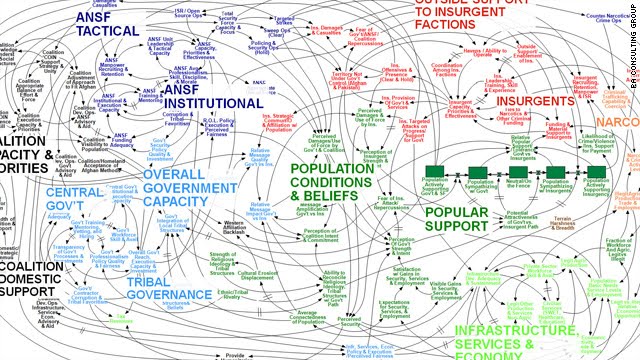
'...How do you create a great presentation?...The answers I found had nothing to do with technology or the internet; they were revealed in screenwriting, Greek and Shakespearean drama, mythology and literature.
Great presenters employ the basic narrative techniques used throughout history to connect with audiences and move them to action and new understanding.
The presentations that work are not the ones with the most data or the most elaborate charts and graphs; the winners are those with the most compelling and convincing narratives...'
Excerpt from CNN, 15 October 2010
- Army officer fired after publishing essay complaining about useless PowerPoints
- Nancy Duarte says bad presentations obscure or conceal key points
- She says successful presentations don't win because of a wealth of data
- Duarte: What makes a PowerPoint work is great storytelling
'Editor's note: Nancy Duarte is the author of "Resonate: Present Visual Stories that Transform Audiences." She is CEO of Duarte Design, a presentation design firm based in Mountain View, California, that worked with Al Gore on the presentation featured in "An Inconvenient Truth" and whose clients include Cisco, Facebook, Google, TED and the World Bank.
A few weeks ago Col. Lawrence Sellin, a Special Forces officer stationed in Afghanistan, fell victim to a particularly modern hazard of war: PowerPoint fatigue.
Col. Sellin was fired from his post at NATO's International Security Assistance Force after he wrote an essay for the UPI wire service in which he voiced his frustration about PowerPoint-obsessed officers who spend more time worrying about font size and bullet points than actual bullets.
Col. Sellin's was just the latest in a series of complaints about the military use of slide presentations - you may recall public ridicule of the famously incomprehensible "spaghetti slide," and a recent New York Times article, that cited other officers just as frustrated with the emergence of the military bureaucracy's "PowerPoint rangers."
But PowerPoint isn't inherently bad - just misunderstood. And bad PowerPoint presentations aren't just a concern of the military. We've all sat through presentations - or suffered or even dozed through them. The truth is, most are poorly constructed and instantly forgettable.
Why does this matter? Because presentations decide elections, military strategies and multibillion-dollar business deals; they educate our children and they spread the ideas that shape society's most important goals and directives.
Ultimately, a presentation succeeds or fails on the strength of its message and how well it's told. And those elements have nothing to do with the brand of the software package involved in its production. You know instantly when you're watching a great presenter at work - you may even own the ShamWow to prove it.
Sometimes, presenters try to punch up weak content with stunts. I remember one speaker who rode onto the stage on a motorcycle - and promptly lost control and crashed. (He was okay.) Another presenter rappelled down to the stage like a mountain climber. I remember the stunts, but not the messages...
Unfortunately, the development of presentations is a skill that is rarely taught and for which few sources of best practices exist. Bad presentations kill ideas, waste money and impede progress. Great ones illuminate, persuade, generate consensus and spark action.How do you create a great presentation? I've been in the business for 20 years, but until recently even I couldn't define the deep structures and elements of truly superior presentations.
My research into this question led me in unexpected directions. The answers I found had nothing to do with technology or the internet; they were revealed in screenwriting, Greek and Shakespearean drama, mythology and literature.
Great presenters employ the basic narrative techniques used throughout history to connect with audiences and move them to action and new understanding.
The presentations that work are not the ones with the most data or the most elaborate charts and graphs; the winners are those with the most compelling and convincing narratives.
We're a distracted, multi-tasking society. So presentations need to lure and re-lure an audience simply to keep their attention. Audiences are looking at the clock or fiddling with their handheld devices throughout a presentation. You don't connect with your audience by throwing information at them - you do it by taking them on a journey toward your perspective.
Whether you're a CEO, a salesperson, a general or a biochemist, you must understand how to connect with an audience, how to construct a powerful narrative argument, and how to visually display information for maximum audience comprehension.
I read recently that our nation is suffering a crisis of literacy, with only 35% percent of high school seniors able to read proficiently. Yes, you read that correctly (assuming you're not part of the 65% of high school seniors.) But literacy really means the ability to communicate effectively. For professionals and citizens in every strata of society, true literacy now includes the ability to communicate effectively through presentations.
The stakes could not be higher for our country. If corporate executives communicate poorly, businesses and the economy suffer, and jobs are lost. If teachers communicate poorly, our children don't learn and advance. If generals communicate poorly, our troops and their missions are put at risk. These are dangers we cannot ignore.'
Fate of the World
Sourced from the Fate of the World Facebook page
'“Fate of the World” is a nail biting set of global warming scenarios covering 200 years of Earth’s existence. At the heart of the game are 10 'Masterplans' where the player calls the shots for all mankind including 'Apocalypse' where the gut wrenching goal is to raise the planet’s temperature a lethal degree; 'Lifeboat' where the goal is to save only the player while abandoning everyone else to whatever catastrophes await them; and 'Utopia' where a player can try to build a perfect society while battling population growth.'
'“Fate of the World” is a nail biting set of global warming scenarios covering 200 years of Earth’s existence. At the heart of the game are 10 'Masterplans' where the player calls the shots for all mankind including 'Apocalypse' where the gut wrenching goal is to raise the planet’s temperature a lethal degree; 'Lifeboat' where the goal is to save only the player while abandoning everyone else to whatever catastrophes await them; and 'Utopia' where a player can try to build a perfect society while battling population growth.'
Subscribe to:
Posts (Atom)